
- first session WED 2026-04-08 10:00 in 3.10.020
- conversations @ https://node.hfk-bremen.de/digital-media-bremen/channels/microdataoperators
- work small, work hard
- become pioneers in ”Programming as a Designer with AI”
- be a director, an operator, an entrepeneur, a maker
- AI makes it much easier to prototype fully-art-directed, weird, oddly specific things+--------------------------------------------------------------------+
| ( add your operator name here ) |
| |
+--------------------------------------------------------------------++--------------------------------------------------------------------+
| ( pick a working title. can be changed. does not need to be arty, |
| or too poetic. can be functional and descriptive ) |
+--------------------------------------------------------------------++--------------------------------------------------------------------+
| ( describe your work. make it interesting. talk e.g about format, |
| the materials, the people you are designing for. use approx |
| 1500 characters ) |
| |
| |
| |
| |
| |
| |
| |
| |
| |
| |
| |
| |
| |
| |
| |
| |
+--------------------------------------------------------------------++--------------------------------------------------------------------+
| ( make an extra effort to describe *why* your work is relevant and |
| to *whom*. ) |
| |
| |
| |
| |
| |
| |
+--------------------------------------------------------------------++--------------------------------------------------------------------+
| ( since this project is about data, briefly describe the data you |
| plan to wokr with. where does it come from? why is it interesting? |
| is it connoted? ) |
| |
| |
| |
+--------------------------------------------------------------------+( sign the document here )
______________________________________________________________________
Operatora brief is a set of rules. rules are brutal and liberating at the same time. explore the edge cases. find the sweet spots. a brief is a possibility space for you to navigate.
micro is smaller than normal. micro is μ. micro is a call to start small. micro is humble. micro is not overthinking. micro is about making. micro suggests control.
data is a collection of values. data is not (yet) information. data is never raw. data is the crude oil of our time. data always comes from somewhere. data is everywhere. almost anything can be (transformed into) data. data is often mystified. data can contain patterns and structures that may be exposed. data can be translated, visualized, and sonified.
operators are not users. operators are not merely programmers. operators are gardeners. operators embrace emergence and serendipity. operators navigate the intersection of computation and human. operators transform abstract systems into tangible, interactive, meaningful form. operators direct the systems. operators manipulate, tweak, craft, discuss, and shape. operators work hard but play soft. operators think part functionally, part intuitively. operators improve their tools. operators are part of a community of operators.
your assignment is to produce a generative design driven by data.
your design …
the only really important things is that it is well designed and possesses a certain relevance.
the data …
the assignment comes with two technical limitations:
in the process of producing your work, you are asked to expose yourself and your process to AI Coding Agents.
any violation of the rules above will result into immediate system failure. happy coding 🙂
Operator Operator (Dennis P Paul)

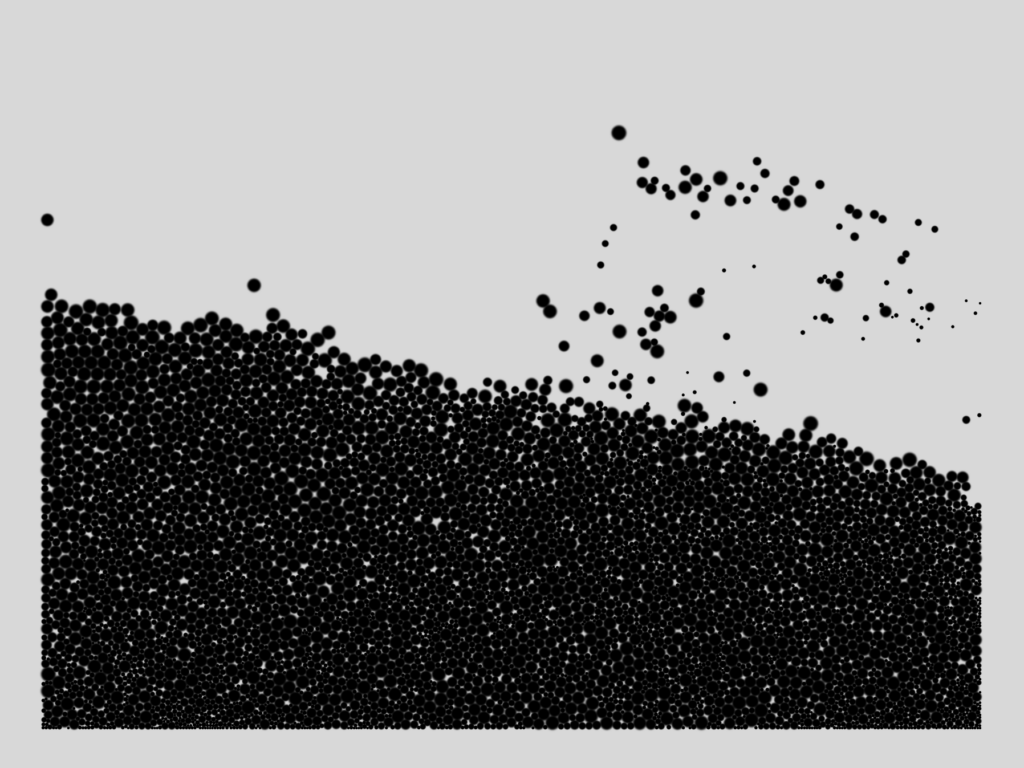
side quest: vibe coding? coding agents? creative coding? muss man als gestalter:in noch programmieren lernen? so wirklich kann das niemand beantworten. in dieser veranstaltung werden wir diese frage nicht (nur) besprechen, sondern durch eigene praxis eine *eigene* meinung entwickeln:
“the key is trying!”


you are no longer designers, programmers or even creative coders: you are OPERATORS
*operator* ( n. ) a practitioner who navigates the intersection of logic, computation, and expression—transforming abstract systems into tangible, often interactive, forms.

in creative coding, an *operator* is not merely a programmer, but an architect of dynamic systems. they manipulate data, algorithms, and interfaces as a sculptor shapes clay or a composer arranges notes. their tools are not just code, but the mathematical *operators* that define relationships: linear transformations, differential equations, or logical connectives that become the grammar of digital art.

an *operator* works at the boundary of precision and intuition, using computational logic to generate visual, auditory, or interactive experiences. they might design generative art with integral *operators*, compose music with differential algorithms, or build immersive environments through the lens of operational calculus. their practice is rooted in the belief that code is not just functional, but a medium for exploration—where every function call, every logical gate, and every data flow is a brushstroke in a larger, evolving composition.

unlike traditional programming, which often prioritizes utility, the *operator* embraces ambiguity, iteration, and the unexpected. they are equally fluent in the syntax of machines and the aesthetics of human perception, crafting works that challenge, provoke, or mesmerize. in this context, *operator* is both a nod to the mathematical foundations of computation and a declaration: that to code creatively is to operate on the boundaries of what is possible.in dieser veranstaltung beschäftigen wir uns, ausgehend von den methoden der Generativen Gestaltung, mit dem finden, sammlen, verarbeiten, prozessieren, visualisieren und sonifizieren von daten unterschiedlichster art.