You find an overview of past and coming sessions here: http://dm-hb.de/pfsi-schedule
Featured post
You find an overview of past and coming sessions here: http://dm-hb.de/pfsi-schedule
For our remaining Reading Circle Sessions, each of you will prepare an introduction for 1 text that will start our discussion of the texts in the session. The goal is to engage with the texts critically and help facilitate a group conversation. Each introduction should be about 10 minutes long and you should pick 1-2 key passages that we can read together. There is no need to use the projector, but you can do so if you like. You can find a possible structure to follow for the introduction below.
In addition to preparing the introduction of your chosen text, you are expected to have read the texts for each session beforehand so you can join the discusssion.
Please sign up for introducing one of the texts in the following sheet until 2025-05-13.
*Please make sure all texts are assigned before putting your name in as a second presenter for a text.*
PFSI Reading Introductions Sheet: https://docs.google.com/spreadsheets/d/1rIqQs4efEBfMZxBI5B526Mha4Wet1ZYbIh0v1XgaUTY/edit?usp=sharing
You can find a Google Drive folder with all texts here: https://drive.google.com/drive/folders/1RTPlBwWFu9C_WoWKfakCdhUJm23Ag6ap?usp=sharing
Possible Structure for Introduction:
Create and perform ( or have somebody else perform ) a ritual from an *alternate* world.
You define the ritual’s nature. It may be of religious, technical, mundane or any other origin. The *alternate* world may be just very slightly removed from the one we know or VERY different. Consider that rituals are often defined by presumably rule-based or repetitive actions and tend to hint to a greater comprehensive meaning.
Describe how the alternate world differs from our world in a short text with max. 101 words.
The ritual is to be performed in our first rehearsal session (2025-05-09). This is a warm-up exercise, so focus on the performative aspects of your ritual. The ritual should last 3 to 5 minutes. We will use the Auditorium as a rehearsal space, and not meet in the classroom. Please come prepared to present and perform your ritual with all necessary elements in place. Finally, make sure to bring your own technical equipment, props, costumes, etc. ( anything besides speakers and a projector, which will be provided ).
Please collect at least three examples of art/design works that you consider to be relevant for our discussion on Performance, Fiction, Speculation and Imaginaries. For each collected reference, consider what you find interesting about it, specifically in terms of how modes of speculation, fiction and/or imagination are used within the work, and how they are presented in a performative manner.
Where and how to start is absolutely individual and subjective i.e up to you: maybe google, maybe seek out the library, maybe have conversations. However you do it, there are a few common reoccuring patterns, that you can read upon in a more structured manner at How to Conduct a Recherche?.
Note that a recherche serves more than one purpose. It is not only important for you to get a more precise understanding of what you want to do but it also serves as a collaborative process to grow a deeper or better understanding of what the overarching topic of this class is and how it could translate into design/art works. Do not underestimate the positive effects of continuous ( even if small grained ) exchanges of bits of information. also look for things that others might interest. try to impress the group with unusual or interesting bits and bobs.
Add your examples to our Google Slides presentation or post them on our Mattermost channel or Truth Social including a short 1–3 sentence statement explaining why you have chosen to share this particular work.
Let us start a collective recherche!
it is our pleasure to see that you are interested in the topic and in this class. in order to structure this class properly and align all our expectations and needs a bit, we kindly ask you to write a short paragraph ( approx 256 words ) about yourself and your interest in the topic and the class.
you may answer the following question:
please send the paragraph to our mailboxes hnieratschker@hfk-bremen.de and d.paul@hfk-bremen.de until 2025-04-11 23:59.
==DISCLAIMER this brief might evolve over time and might even serve as an introductory text for the final performance event==
Science/Speculative fiction in literature and cinema has established itself as a critical mode of inquiry by raising questions on the implications of new (digital) technologies and alternative, future ways of living. Many artists and designers are also crafting, visualizing, and (re-)interpreting fictions, speculations, and imaginaries in order to shape, challenge, and discuss predominant cultural, social, and technological narratives.
For your main project in this class, you will be exploring how fictional narratives, speculative scenarios, and imaginaries of alternative worlds can be built through performative dimensions in your art and design practices. Based on initial learnings from quick experiments, take-aways from our bi-weekly reading circle, and a deeper recherche into a topic of your choice, you will be developing an individual or collaborative, time-based project that is inspired by, makes use of, embraces, and/or breaks with the aesthetics, strategies, and principles of speculation, fiction, and imaginaries we collectively encounter throughout our class.
Although fictions are often presented, delivered, and narrated through words and spoken language, we as designers and artists should see it as a challenge to explore alternative media, contexts, and forms of delivery— in this case, through the means of performative practices— and may even challenge the assumption of fiction as narration itself.
The process of developing your projects is structured by a series of smaller assignments that you should take as opportunities to progress within your project and create plateaux. Experiment with different tools and strategies for making and thinking; explore various aspects within your topic. Try out different modes of presentation and storytelling, etcetera.
We will discuss the intermediate steps of your specific projects on the occasion of 3 rehearsals throughout the semester, as well as in plenary sessions and individual feedback meetings.
Finally, we plan to present your projects in a collectively organized performance evening after the end of the semester. We advise you to consider this format when developing your projects.
PS { *fiction* does not necessarily equal *science fiction* 😉 }
Ursula K. Le Guin. The Carrier Bag Theory of Fiction. 1986.
access to text at: monoskop.org
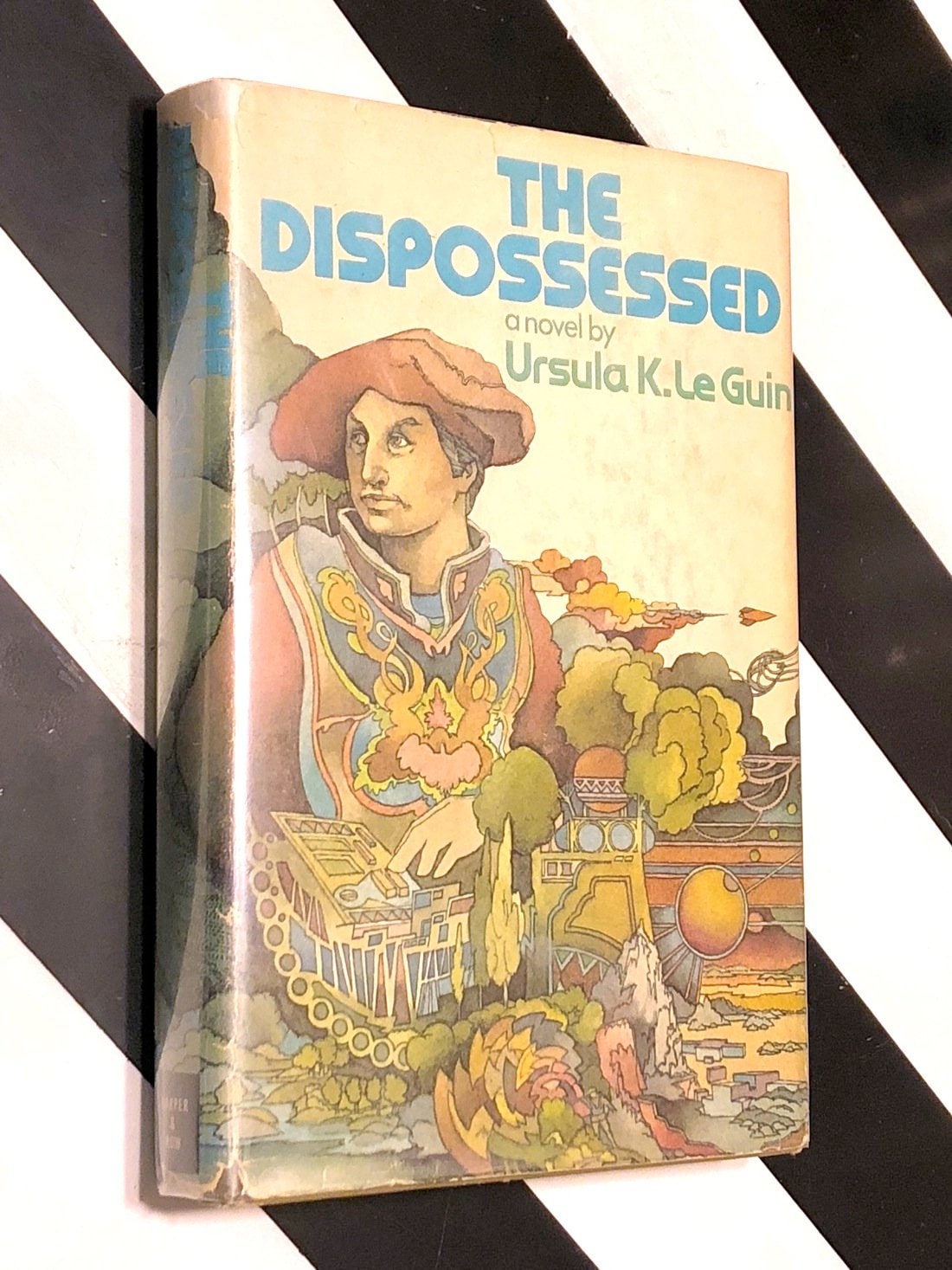
Ursula K. Le Guin. The Dispossessed. 1974.
access to text here.


First session will be on FRI 2025-04-11 10:00 in room 3.10.020

This seminar explores the performative dimension of fictions, speculations, and imaginaries through practice and theory.
This is a joint seminar by Henrik Nieratschker and Prof. Dennis P Paul. It combines study modules DM.M-MD (Media Design / Special Topics in Digital Media) and DM.M-MT (Media Theory / Special Topics in Digital Media). Full participation is credited with 12CP in total.
The joint seminar meetings will take place on Fridays between 10:00–18:00.
Students from all departments are welcome.
The seminar will be held in English.